Paint
Oil Paint
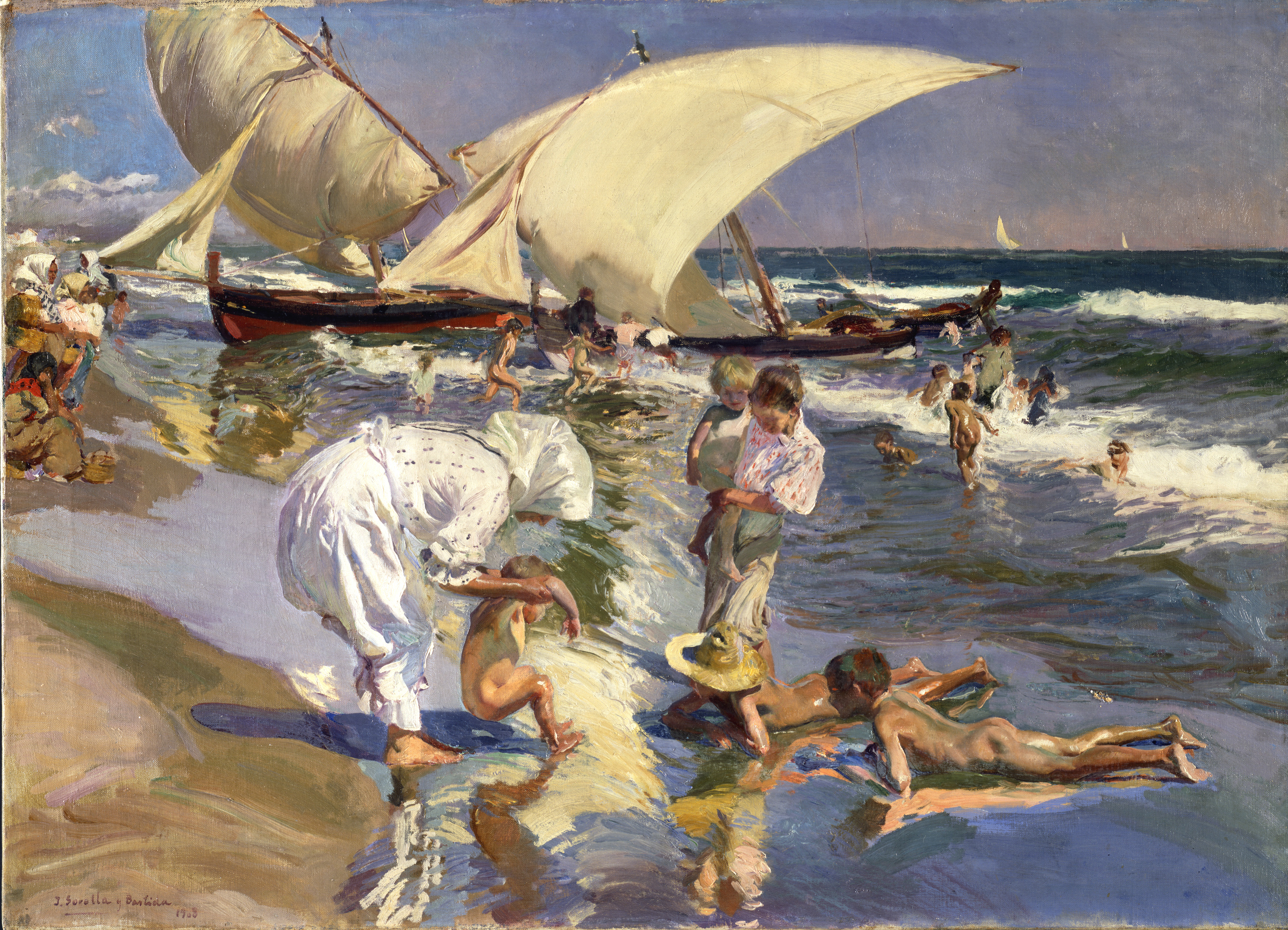
Oil paint is a slow-drying medium consisting of pigment particles suspended in a drying oil — most commonly linseed, walnut, or poppy oil. It has been the dominant painting medium …
Read more →
Store coming soon
◎
Tools
Brushes
A brush is the artist's most direct extension of the hand — the point where intention becomes mark. Unlike paint or surface, which the artist responds to, a brush is chosen and controlled; its shape, hair, and size determine what kind of gesture is even possible before the first stroke is made. There is no single correct brush. There is only the right brush for the mark you are trying to make.
◎
Paint
Acrylic Paint
Acrylic paint is a fast-drying medium in which pigment is suspended in an acrylic polymer emulsion. When wet it is water-soluble; when dry it forms a flexible, water-resistant, permanent film. Developed in the mid-20th century, acrylics are the newest of the major fine art painting media and the most versatile: they can be diluted to the transparency of watercolour, built to the texture of oil paint, or applied as solid, flat fields of colour. Their fast drying time, low toxicity, and wide range of available mediums made them the defining material of postwar American art and continue to make them the most widely used studio medium in the world.
Paint
Watercolour
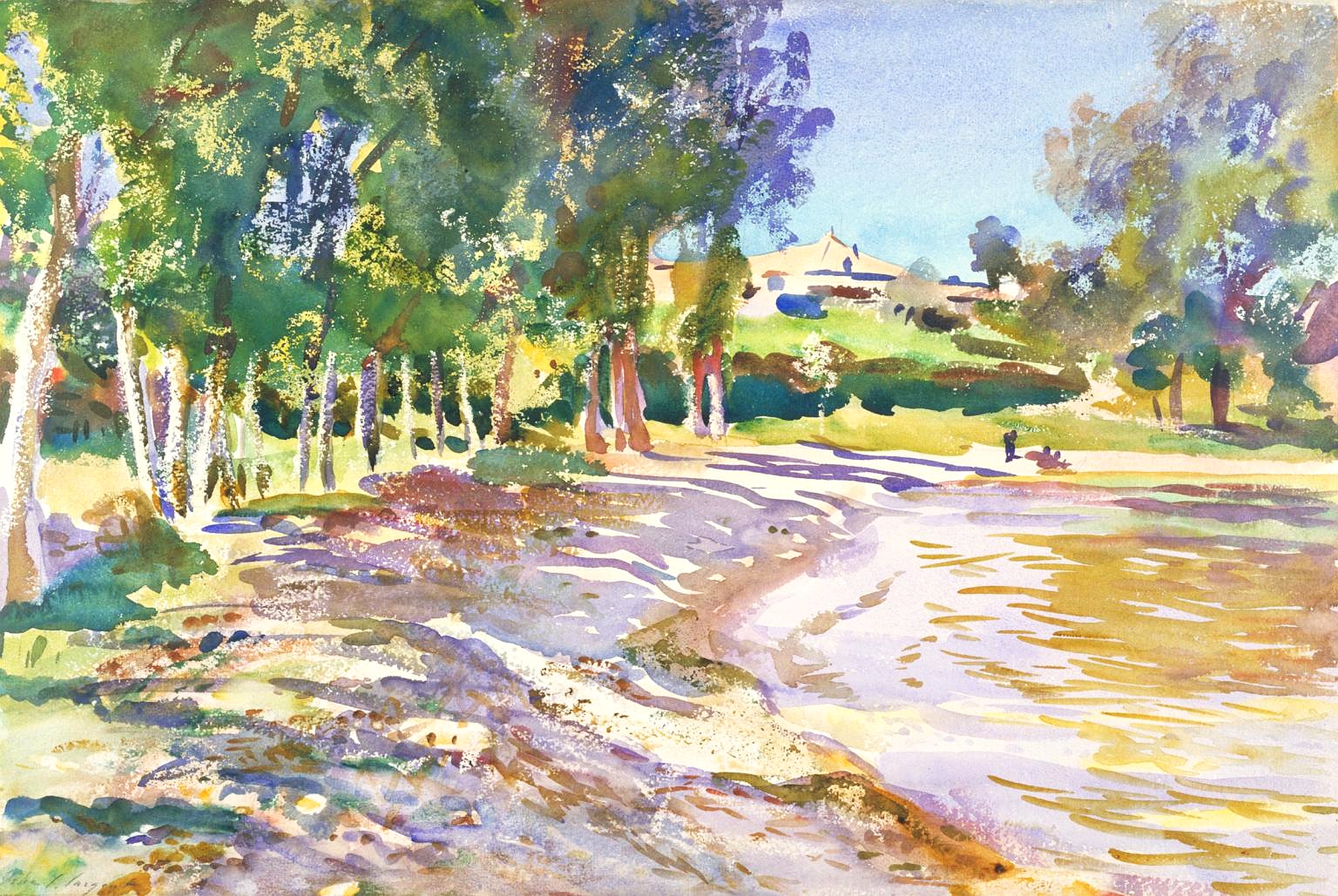
Watercolour is the only medium where your biggest tool is restraint. Pigment ground fine and suspended in gum arabic, dissolved in water, applied to paper — and what happens next is partly yours and partly not. That negotiation is the medium.
Unlike oil or acrylic, watercolour has no white paint. The white is the paper itself. This single fact changes everything about how you think: you plan backwards, protect your lights from the start, and build darkness in layers of transparent colour. You cannot cover a mistake. You can only move forward from it.
What separates watercolour from every other medium is its relationship with light. Because the pigment sits on top of — or slightly into — the paper fibre, and the paper reflects light back up through the transparent layers, finished watercolours have a luminosity that cannot be replicated. Scanned, photographed, printed — it always loses something. The original glows.
The medium rewards artists who can think three moves ahead and let go at exactly the right moment. That combination of planning and surrender is rarer than it sounds.
◎
Paint
Gouache
Gouache is watercolour that decided to stop being transparent. Same binder, same pigments, same water — but with the addition of chalk or other opaque fillers, it becomes a medium that covers completely and dries to a flat, velvety matte surface unlike anything else in painting.
The flatness is not a limitation. It is the point. Gouache does not mimic light the way oil or watercolour does — it describes it. Every shape is a decision. Every edge is deliberate. The medium demands clarity of thought because there is nowhere to hide: no texture, no gloss, no translucency to carry you through an uncertain passage.
Historically the medium of illustration, animation, and design, gouache is now experiencing a serious reconsideration as a fine art medium. Its opacity makes it the only water-based paint that works on toned or dark surfaces. Its fast drying and rewettable surface make it ideal for quick, direct colour work. And its matte finish photographs and reproduces better than almost any other medium — which in a visual culture driven by screens is not a trivial advantage.
◎
Medium
Gel Medium
Gel medium is essentially acrylic paint without pigment — the same 100% acrylic polymer binder, colourless and transparent. It is the most versatile and widely used acrylic medium, accounting for nearly 40% of the acrylic medium market. Available in five consistencies (Soft, Regular, Heavy, Extra Heavy, and High Solid) and three finishes (Gloss, Semi-Gloss, Matte) — each combination serving a different purpose. The name refers only to viscosity, not to softness or weight when dry.
◎
Medium
Molding Paste
Molding paste — sometimes called modeling paste — is an opaque, marble-dust or chalk-based medium that builds hard, three-dimensional surfaces. Unlike gel medium which dries transparent, molding paste dries opaque white and can be sanded, carved, drilled, and painted over. It is the primary medium for creating topographical texture and sculptural relief in acrylic painting.
◎
Medium
Pouring Medium
Pouring medium reduces the surface tension of acrylic paint so it flows freely across a surface, self-levels, and dries without the crazing (cracking) that occurs when paint is simply thinned with water. It is the essential medium for fluid acrylic and pour painting. The most reliable professional option is Golden GAC 800, specifically formulated to resist crazing. Liquitex and DecoArt offer mid-market alternatives.
◎
Medium
Retarder Medium
Retarder medium slows the drying time of acrylic paint, extending the open working time from minutes to hours. This allows wet-into-wet blending, soft gradients, and correction — properties that are otherwise unavailable in standard acrylic painting. The critical rule: keep retarder below 15–20% of total paint volume. Exceeding this threshold compromises the integrity of the dried paint film and may prevent proper curing entirely.
◎
Medium
Matte & Gloss Medium
Matte and Gloss mediums modify the final sheen of acrylic paint — the most basic but frequently underestimated control an acrylic painter has over their surface. Acrylic paint is naturally glossy when dry; matte medium brings it to a flat, non-reflective finish. Gloss medium intensifies colour saturation and adds luminosity. Mix the two in any proportion to achieve semi-gloss or satin. Both function simultaneously as paint extenders, flow improvers, and collage adhesives.
◎
Medium
Flow Improver
Flow improver — also called flow aid or flow release — reduces the surface tension of acrylic paint without significantly thinning its colour or binder. A small amount allows paint to spread smoothly and evenly, preventing drag, streaking, and brush marks. It is the essential additive for fine detail work, watercolour-style washes, and any technique requiring clean, even coverage on an absorbent surface.
◎
Medium
Linseed Oil
The most widely used oil medium in painting — and the same binder used in most commercial oil paints. Amber-coloured and pourable like double cream. Increases gloss, transparency, and flow. Slows drying time slightly compared to paint straight from the tube. Dries to a strong, flexible, durable film — one of the most archivally stable binders in painting history. Important limitation: linseed oil yellows over time, particularly in dark or unlit storage. This yellowing bleaches back when the painting is returned to light, but avoid using linseed for whites, pale blues, and delicate flesh tones.
◎
Medium
Stand Oil
Stand oil is linseed oil that has been thickened by heat-polymerisation — historically by leaving linseed oil to stand in sunlight for months, hence the name. The result is a much more viscous oil with exceptional flow-leveling properties. Applied to canvas, stand oil self-levels beautifully, reducing brush marks to a smooth enamel-like surface. It yellows less than regular linseed oil and dries to an extremely durable, flexible film.
◎
Medium
Walnut Oil
The clearest and most colourless of the drying oils — preferred wherever linseed yellowing would be a problem. Walnut oil has been used in painting since at least the Renaissance, particularly for whites, pale blues, and delicate flesh tones. It is non-toxic with a faint, pleasant scent. Dries more slowly than linseed but produces a flexible, moderately strong film. Not as strong as linseed when fully cured — best reserved for upper layers and colours where colour clarity matters most.
◎
Medium
Liquin
Liquin is Winsor & Newton's alkyd resin medium — the most widely used modern oil painting medium in the world. It significantly speeds drying time (touch-dry in 1–3 days versus weeks for straight oil), increases transparency and gloss, and improves flow. It is the preferred medium for glazing, layered indirect painting, and any technique where faster drying between sessions is essential. Important: once you introduce Liquin into a painting, continue with Liquin throughout — do not alternate layers of alkyd and straight oil.
◎
Medium
Turpentine & OMS
Solvents are not mediums in the strict sense — they thin paint and clean brushes rather than modifying its film-forming properties. But they are essential companions to all other oil mediums. Turpentine is the traditional artist solvent — powerful, able to dissolve resins, but strong-smelling and requiring ventilation. Odourless Mineral Spirits (OMS) — with Gamblin's Gamsol as the artist standard — performs the same function with far less fume and is safer for regular studio use. Never use hardware-grade turpentine or white spirit — impurities affect paint films.
◎
Medium
Cold Wax Medium
Cold wax medium is a mixture of beeswax and solvent (typically OMS or turpentine) that thickens oil paint to a stiff, buttery consistency and produces a distinctive matte, velvety surface. It has become increasingly popular as a medium for gestural, layered, and encaustic-influenced abstract work. Cold wax changes not just the texture but the entire character of oil paint — reducing its natural gloss to a waxy, luminous depth that no other medium replicates. Important rule: use cold wax only in upper and final layers. Never use it in underlayers, and never combine with fast-drying alkyd mediums like Liquin.